Offset Research Built for Drilling Performance
Structured, area-based drilling intelligence built on 15+ years of Western Canadian operations. Design wells using validated performance data instead of manual file review.
Map-Based Intelligence for Engineering Teams
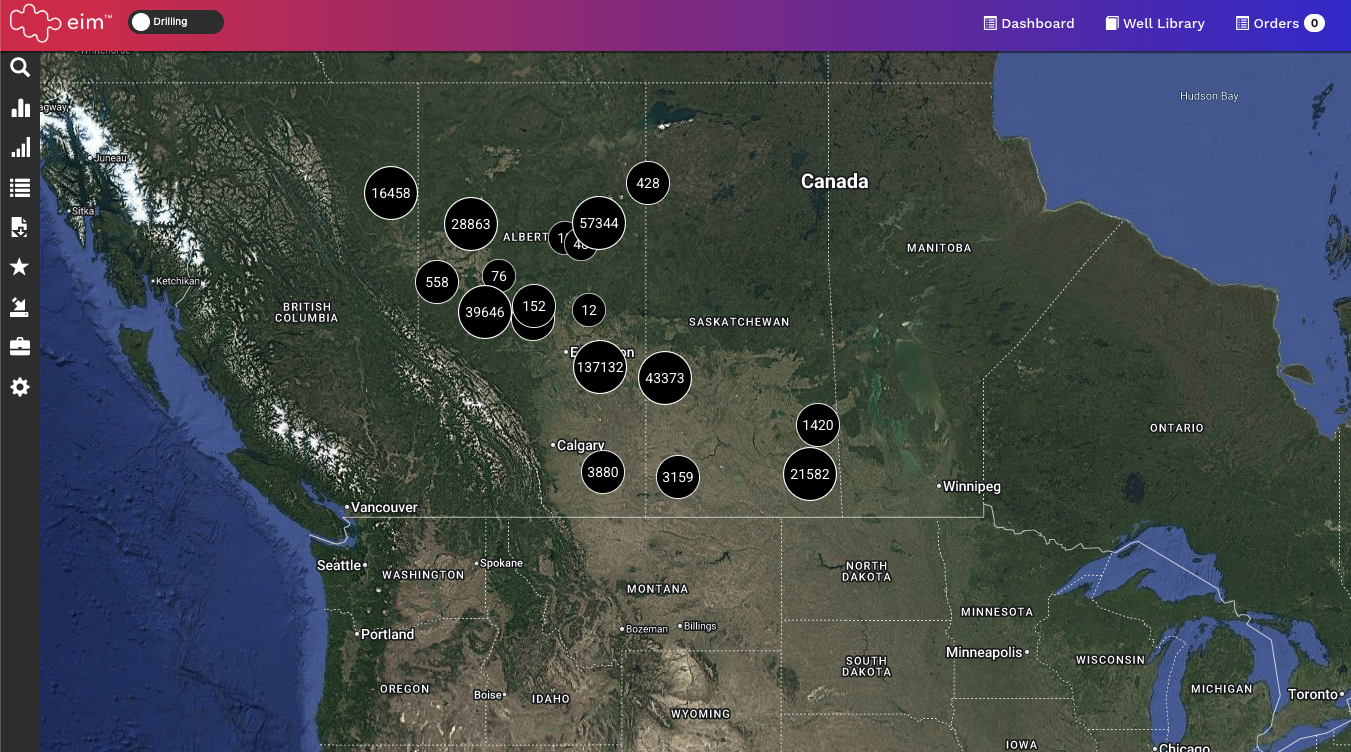
EIM consolidates 15+ years of drilling activity into a structured, searchable intelligence layer. Spud and rig release timelines, meters per day, casing configuration, service involvement, and operational sequences are organized for direct comparison.
Users define an area of interest, filter for comparable wells, and build standardized offset sets within minutes. Teams work with normalized drilling intelligence designed specifically for offset research.
Core Offset Research Capabilities
Area-Based Well Search
Filter wells by geographic area and operational parameters for targeted research.
Like-for-Like Well Matching
Compare wells with similar configurations, formations, and design parameters.
Spud-to-Rig-Release Tracking
Full performance timeline tracking from spud date through rig release.
m/day Benchmarking
Normalized meters-per-day comparison across offset wells and programs.
Service Company Comparison
Evaluate service provider performance across comparable well sets.
AFE vs Productivity Analysis
Correlate AFE estimates with actual drilling productivity outcomes.
Comparative Reports
Cross-well reports covering mud, bits, cement, and time log analysis.
Offset Research Delivered as a Program Input
EIM delivers structured offset research packaged as a ready-to-use drilling intelligence document. Each report includes performance benchmarking, AFE context, unplanned NPT themes, cementing observations, service company comparisons and operational risk indicators.
The output supports drilling program development at pad or area level.
Structured Area Records with Optional Deep-Dive Reports
Offset research begins with a comprehensive area-wide drilling dataset covering historical performance, operational timelines and well design parameters.
For deeper execution-level insight, users can order detailed tour reports for selected wells, including top-performing and underperforming wells within the same area.
- Top 3 / Bottom 3 well comparison
- Detailed time-log extraction
- NPT classification
- Execution risk insights
Machine Learning-Driven Data Standardization
EIM applies machine learning to standardize and correct drilling records. Automated models identify anomalies, normalize events and prepare data for reliable comparison.
Users can interact with drilling data using natural language directly on the map to retrieve performance and NPT insights instantly.
- Machine learning data correction
- Automated anomaly detection
- Natural language well queries
- Pattern detection across offset sets
Standardize Offset Research Before Program Finalization
Offset research impacts drilling speed, cost per meter and execution risk. EIM provides a structured intelligence process that converts historical drilling activity into engineering-ready input.